
Equalization
Flow and pollutant-load variations are balanced before the main process.
Wastewater Treatment
Compact WaterMill biological treatment solutions engineered around wastewater characteristics, site conditions and operating targets.
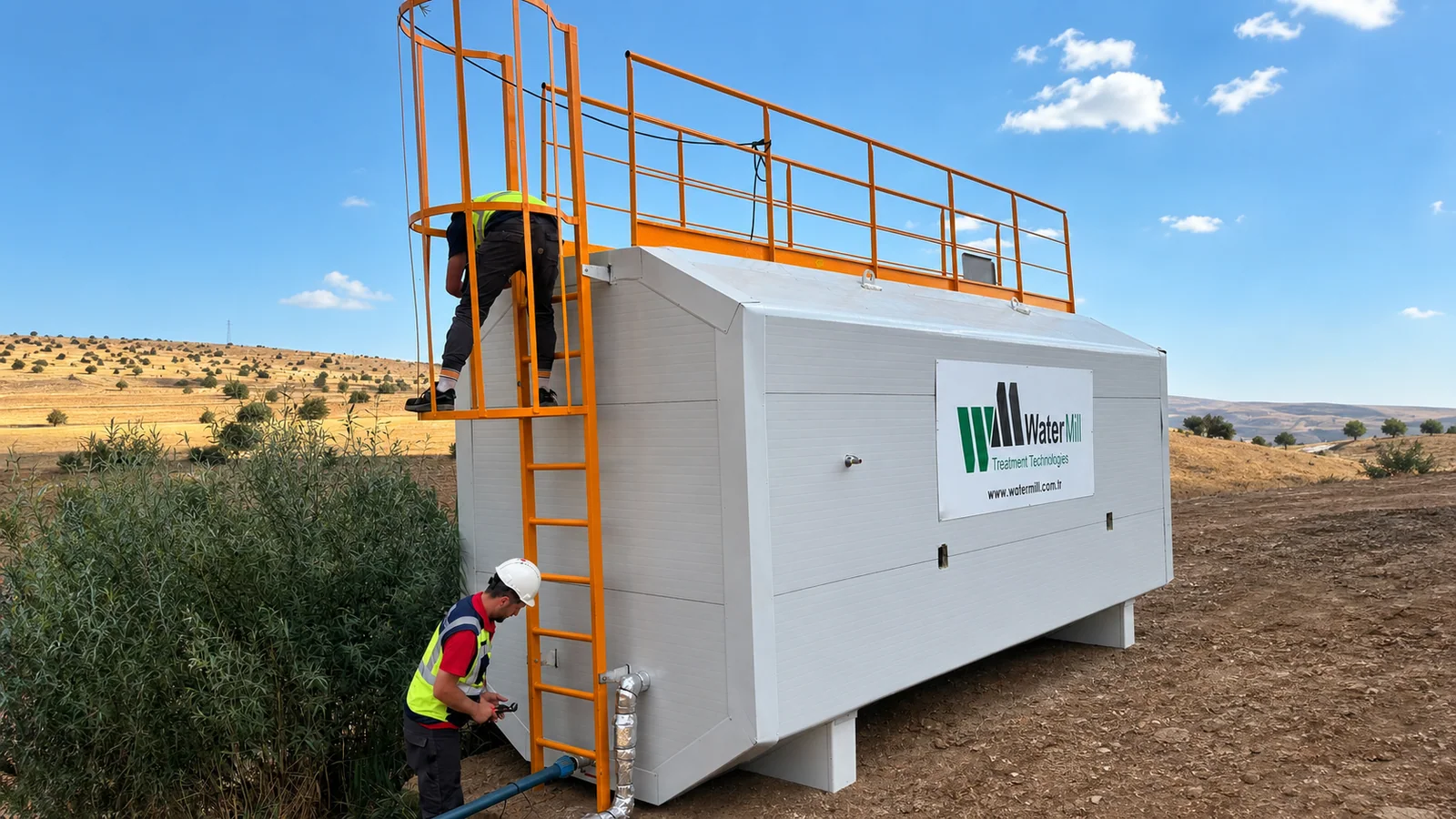
WaterMill packaged-solution approach
The value of a packaged system is not only its compact footprint. It comes from the right process, accessible equipment and a clear operating layout.
Flow and pollutant-load variations are balanced before the main process.
The biological scenario is configured around actual wastewater characteristics.
Treated water and biological sludge are separated under controlled conditions.
Effluent is assessed against the target and supported with additional stages when needed.
WaterMill in the field
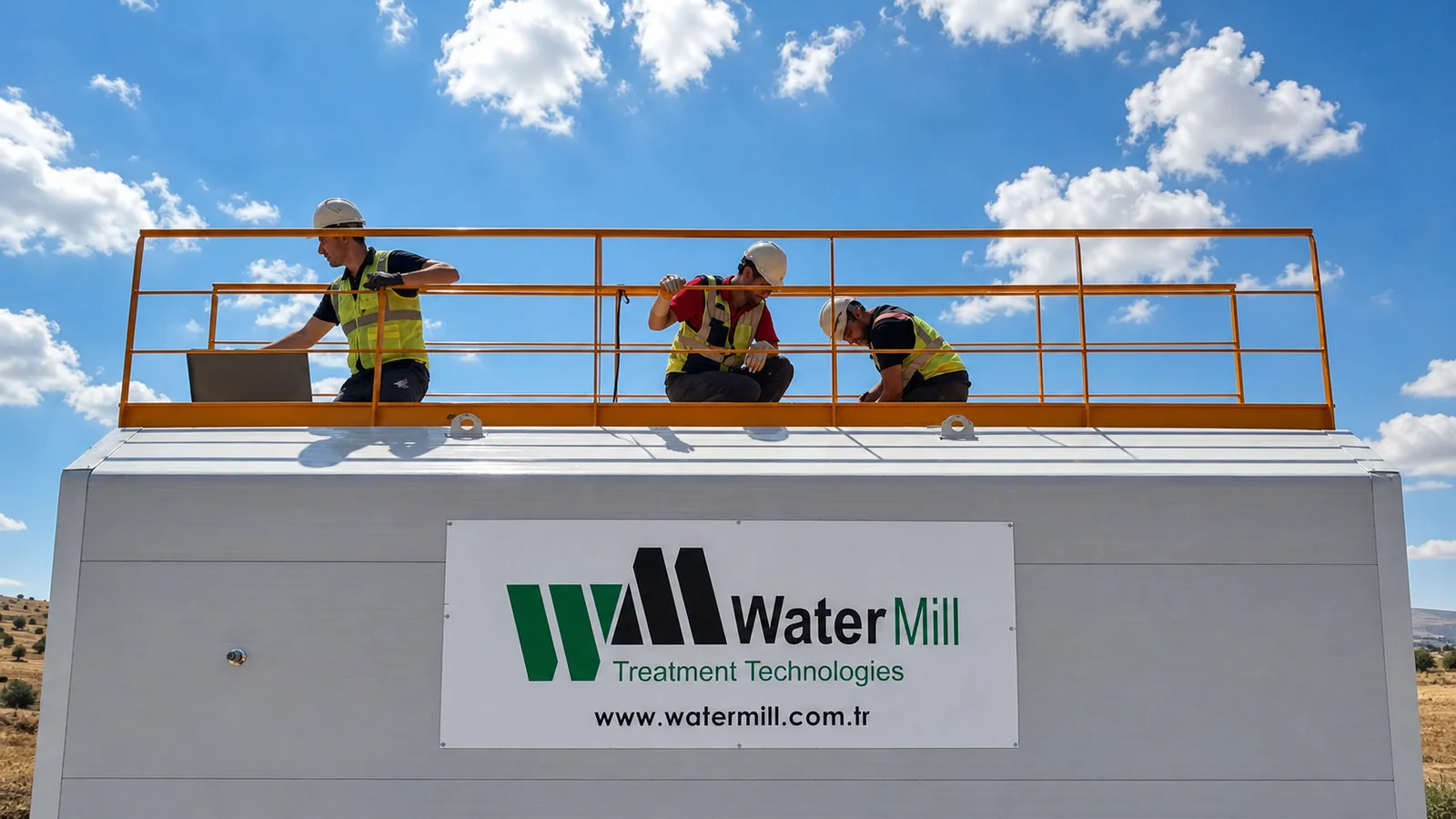
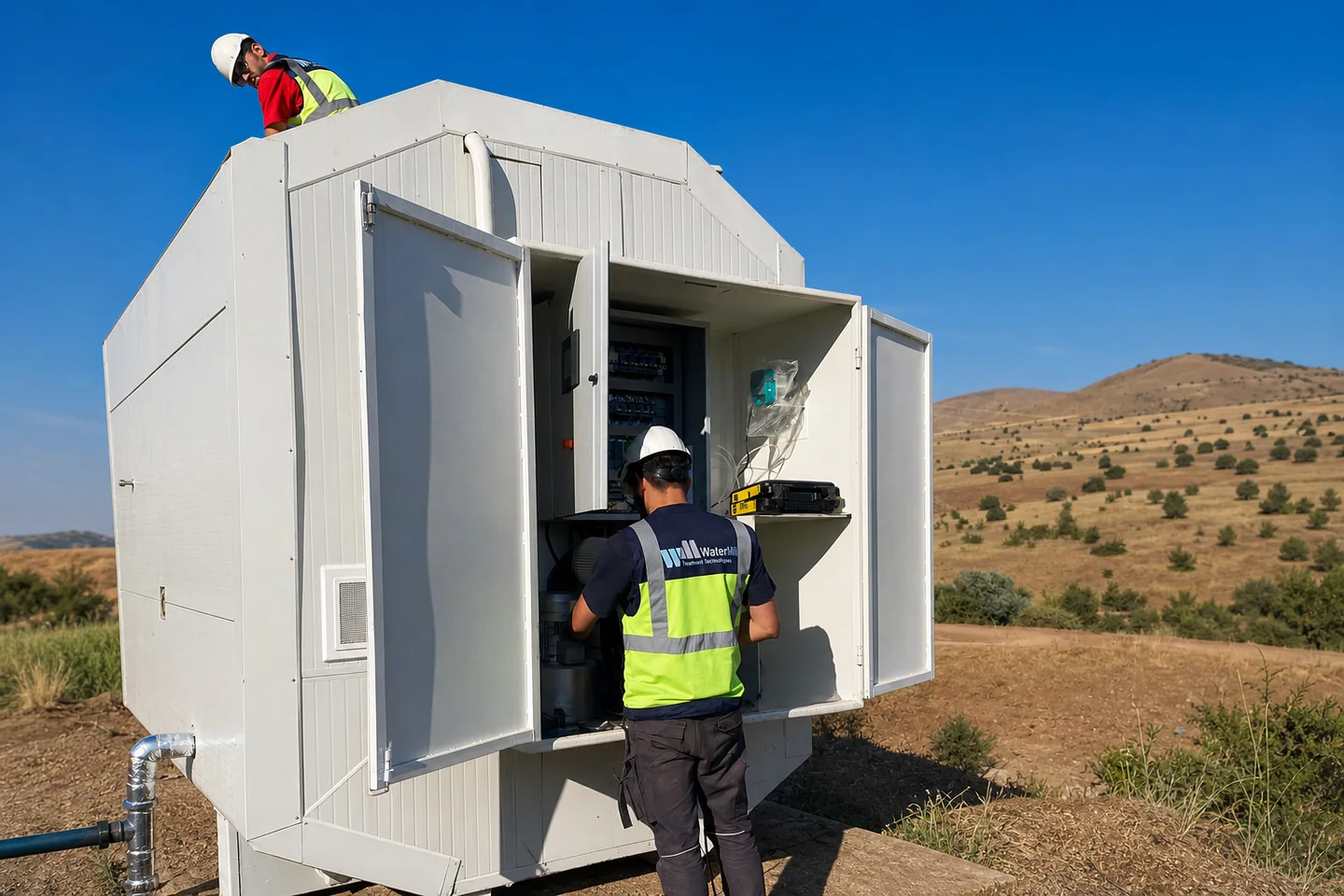
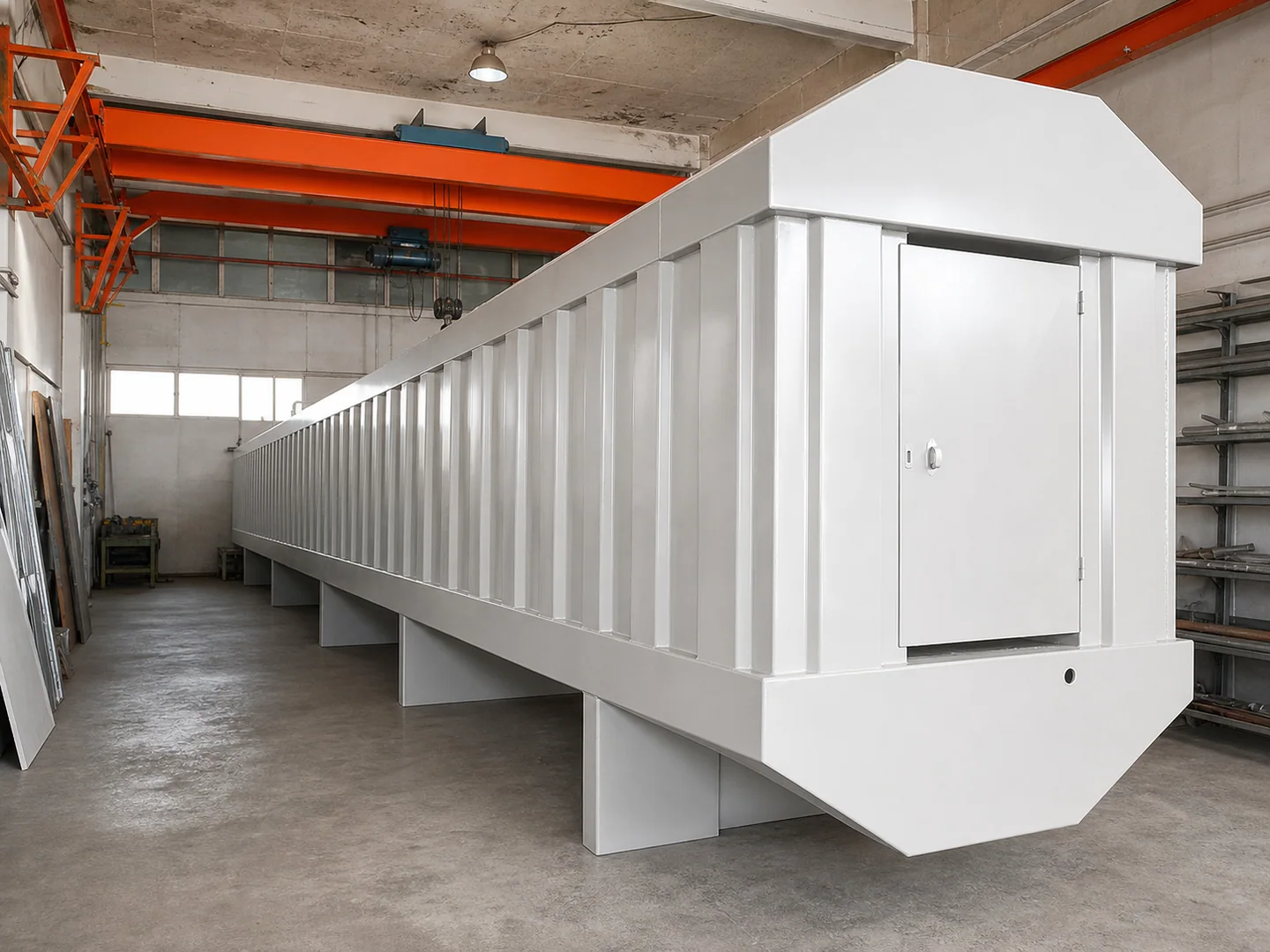
From manufacturing to field installation and service access, each stage shows that compact layout, safe access and maintenance planning are integral parts of the design.
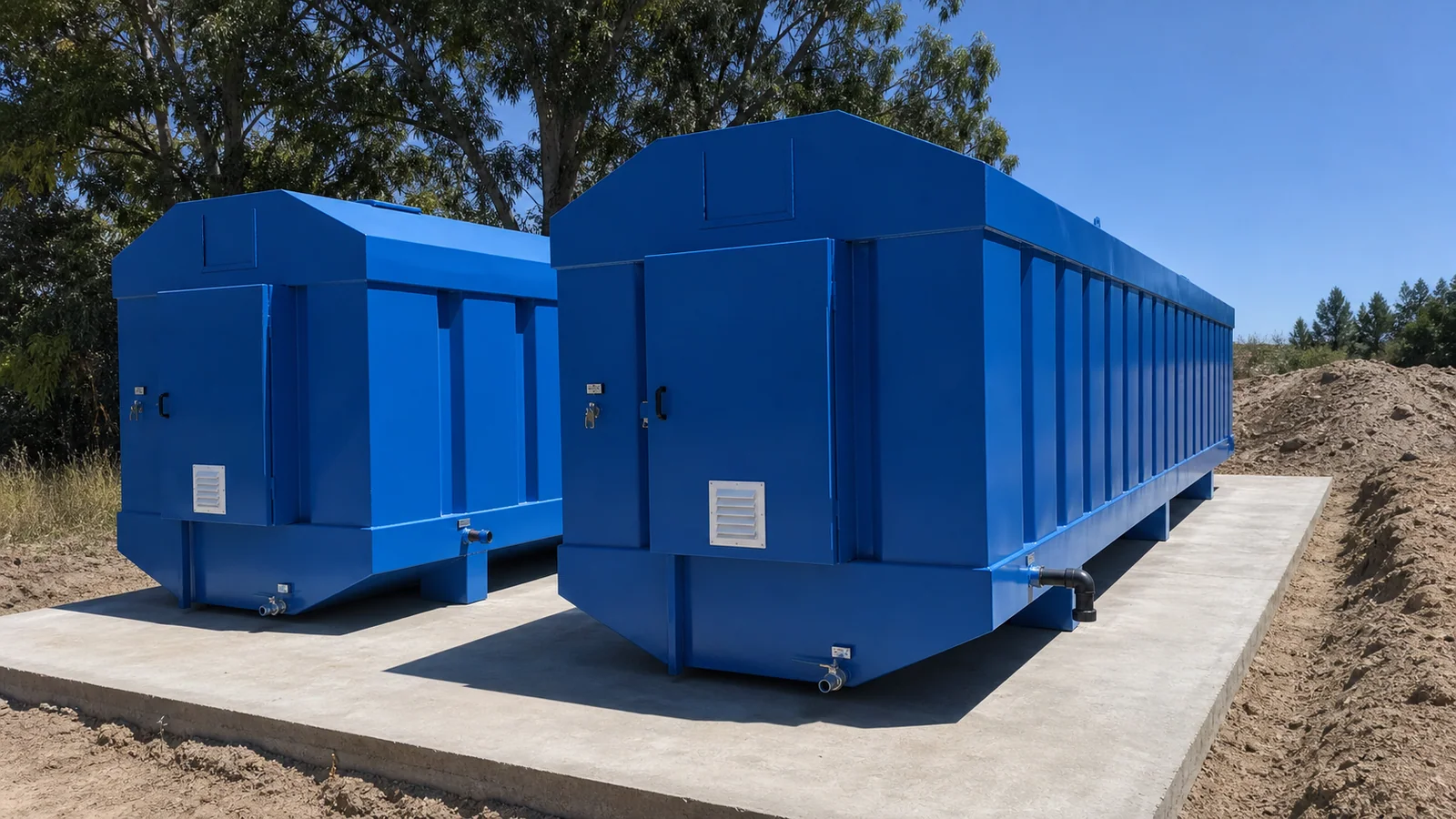
WaterMill technical infographic
This diagram is not a fixed catalogue promise. It presents the key design considerations evaluated for each WaterMill packaged system.
Wastewater characteristics and the target quality are assessed together.
Installation footprint and service access are part of the design.
Equipment layout is considered around the operating scenario.
The control approach is configured around facility needs.
Installation options are evaluated against site conditions.
The discharge or reuse target guides process decisions.
WaterMill packaged-series map
The WaterMill packaged series presents nominal flow classes that accelerate the initial review. Final system scope is defined around wastewater analysis and site conditions.
Population equivalent
25 people
Packaged-unit envelope: 110 × 260 × 180 cm
Population equivalent
100 people
Packaged-unit envelope: 200 × 400 × 260 cm
Population equivalent
200 people
Packaged-unit envelope: 220 × 630 × 260 cm
Population equivalent
350 people
Packaged-unit envelope: 235 × 750 × 280 cm
Population equivalent
500 people
Packaged-unit envelope: 235 × 1000 × 280 cm
Population equivalent
1000 people
Packaged-unit envelope: 235 × 1350 × 280 cm
The number in each series name indicates population equivalent. For example, WaterMill 25 is the preliminary class for 25 people and a nominal wastewater flow of 5 m³/day. Final engineering is verified against wastewater characteristics, peak flow, site footprint and discharge target.
Sample tank simulation
Preliminary equalization-tank layout view
B · Width
L · Length
H · Height
Equalization tank
300 × 320 × 300 cm
B × L × H · 28.8 m³ gross volume
Presettling tank
300 × 100 × 300 cm
B × L × H · 9.0 m³ gross volume
Packaged-unit envelope
220 × 630 × 260 cm
B × L × H · preliminary layout envelope
| WaterMill model | Population equivalent | Wastewater flow m³/day | Packaged-unit envelope | Presettling tank | Equalization tank | ||||||
|---|---|---|---|---|---|---|---|---|---|---|---|
| B | L | H | B | L | H | B | L | H | |||
| WaterMill 25 | 25 | 5 | 110 | 260 | 180 | 200 | 80 | 300 | 200 | 150 | 300 |
| WaterMill 50 | 50 | 10 | 160 | 300 | 260 | 200 | 80 | 300 | 200 | 150 | 300 |
| WaterMill 100 | 100 | 20 | 200 | 400 | 260 | 250 | 80 | 300 | 250 | 200 | 300 |
| WaterMill 150 | 150 | 30 | 200 | 530 | 260 | 300 | 100 | 300 | 300 | 250 | 300 |
| WaterMill 200 | 200 | 40 | 220 | 630 | 260 | 300 | 100 | 300 | 300 | 320 | 300 |
| WaterMill 250 | 250 | 50 | 220 | 680 | 260 | 300 | 100 | 300 | 300 | 320 | 300 |
| WaterMill 300 | 300 | 60 | 235 | 700 | 280 | 350 | 100 | 300 | 350 | 300 | 300 |
| WaterMill 350 | 350 | 70 | 235 | 750 | 280 | 350 | 100 | 300 | 350 | 350 | 300 |
| WaterMill 400 | 400 | 80 | 235 | 850 | 280 | 400 | 100 | 300 | 400 | 400 | 300 |
| WaterMill 500 | 500 | 100 | 235 | 1000 | 280 | 400 | 100 | 300 | 400 | 500 | 300 |
| WaterMill 600 | 600 | 120 | 235 | 1185 | 280 | 450 | 100 | 300 | 450 | 500 | 300 |
| WaterMill 750 | 750 | 150 | 235 | 1250 | 280 | 500 | 100 | 300 | 600 | 450 | 300 |
| WaterMill 1000 | 1000 | 200 | 235 | 1350 | 280 | 600 | 100 | 300 | 600 | 600 | 300 |
Reference screen-channel dimensions: B 40 cm, L 100 cm, H 70 cm.
Where a suitable existing septic tank is available, its volume can be assessed for presettling and equalization requirements.
To keep the packaged unit clear of the ground, the reinforced-concrete base should extend 50 cm beyond unit B and 100 cm beyond unit L, with an indicative thickness of approximately 40 cm.
A treated-water storage chamber can be added after transport limits and site layout are reviewed.
Technical note: Dimensions in the table are for preliminary assessment. Final dimensions are determined by the WaterMill engineering team after wastewater characterization, peak flow, transport conditions, site elevations, ground data and project-specific concrete requirements are verified.
Selecting the right system
Two facilities with the same daily flow may have very different wastewater behavior. Before preparing a proposal, WaterMill evaluates flow, pollutant load, effluent target, site conditions and the operating pattern together.
Layout, service access and installation method are evaluated together.
Pollutant load and variation matter as much as daily flow.
Automation, maintenance access and operator needs are considered from the start.
Technical selection matrix
The table below explains how technical inputs become design decisions during the WaterMill proposal process.
| Project input | Design output |
|---|---|
| Daily and peak flow | Hydraulic capacity and equalization requirement |
| Pollutant load and variation | Biological-process configuration |
| Discharge or reuse target | Required effluent scenario and additional stages |
| Footprint and service access | Layout plan and maintenance approach |
| Automation and operation expectations | Control scenario and equipment options |
Model, capacity and dimensions are determined by evaluating wastewater analysis, flow, site footprint and the effluent target together. Share your available data so our technical team can assess the appropriate system configuration.
Engineering and life cycle
Equipment and materials are selected for project conditions from internationally established manufacturers and verifiable technical standards; manufacturing and factory acceptance checks are documented.
For wastewater projects within scope, engineering documentation is developed with the applicable Turkish Ministry Circular No. 2025/5 and current technical criteria in view.
Capacity is engineered around analysis, flow, load and site conditions, from small facilities to municipal, industrial-zone and large industrial plants.
Process design, equipment selection, manufacturing, automation, installation, commissioning and operator guidance can be delivered under one project scope.
Warranty, preventive maintenance, repair, spare parts, consumables planning and process-performance support are addressed throughout the system life cycle.
A wastewater system works well in the field when the process is right from the beginning. WaterMill treats packaged systems as more than a collection of equipment: they should be operable from commissioning day, serviceable over time and adaptable when the requirement evolves.
We evaluate flow variation, pollutant load, footprint and effluent target together, then design a system that is capable without becoming unnecessarily complex. The goal is not to select a generic product from a catalog. It is to configure the right system for the field.
Capacity is determined using flow, pollutant load and discharge targets.
Yes. The control and monitoring scope is configured around the facility's operating needs.
No. Wastewater profile and site conditions may differ even at similar flows. The process and equipment layout are assessed for each project.
When reuse is a target, the necessary polishing and disinfection stages are evaluated separately within the project scope.
Proven in the field
For packaged and project-specific wastewater systems, the process is selected by evaluating flow, pollutant load, site footprint and effluent targets together. The WaterMill portfolio includes both SBR and MBR-based applications.
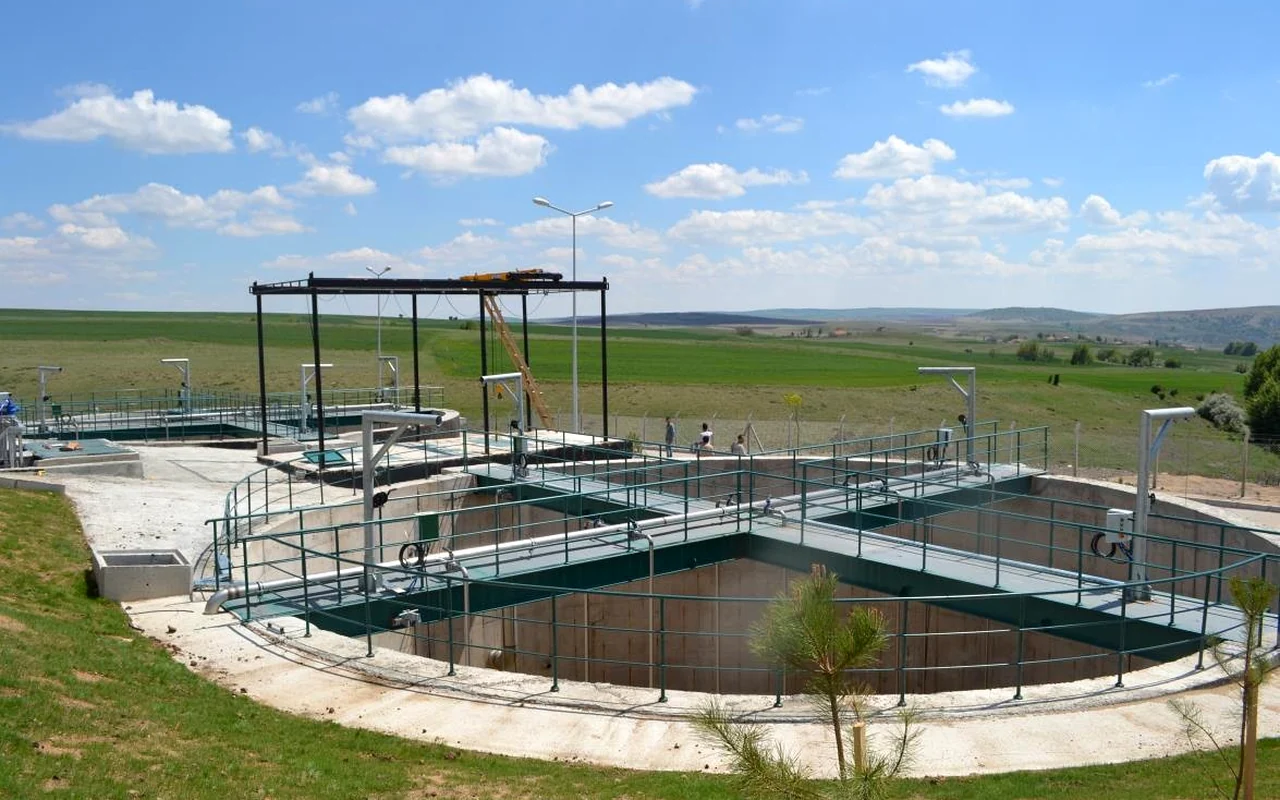 2,057 m³/day
 Yozgat, Türkiye
Campus wastewater treatment plant implemented with a sequencing-batch biological process.
Archive status: Completed
Explore project →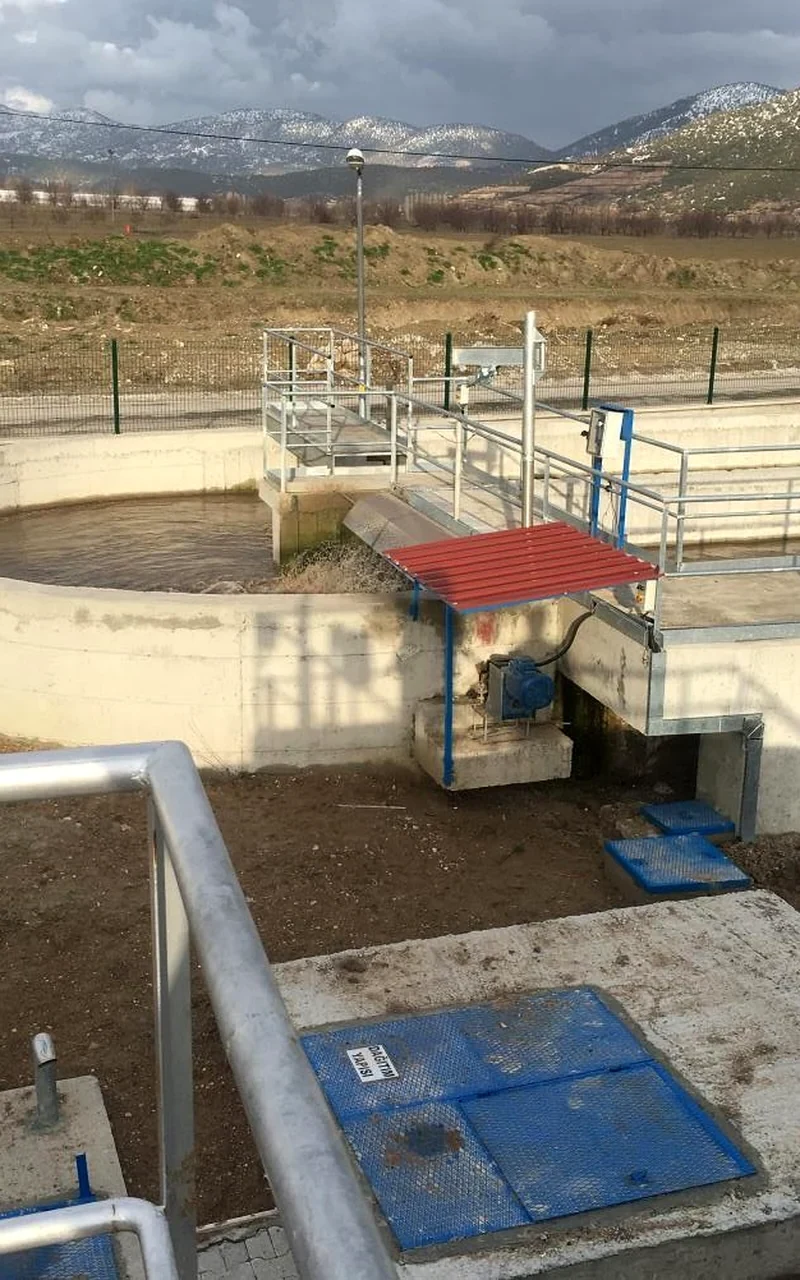 500 m³/day
 Çameli / Denizli, Türkiye
Wastewater treatment plant developed for Çameli, Denizli using an extended-aeration biological process.
Archive status: Completed
Explore project →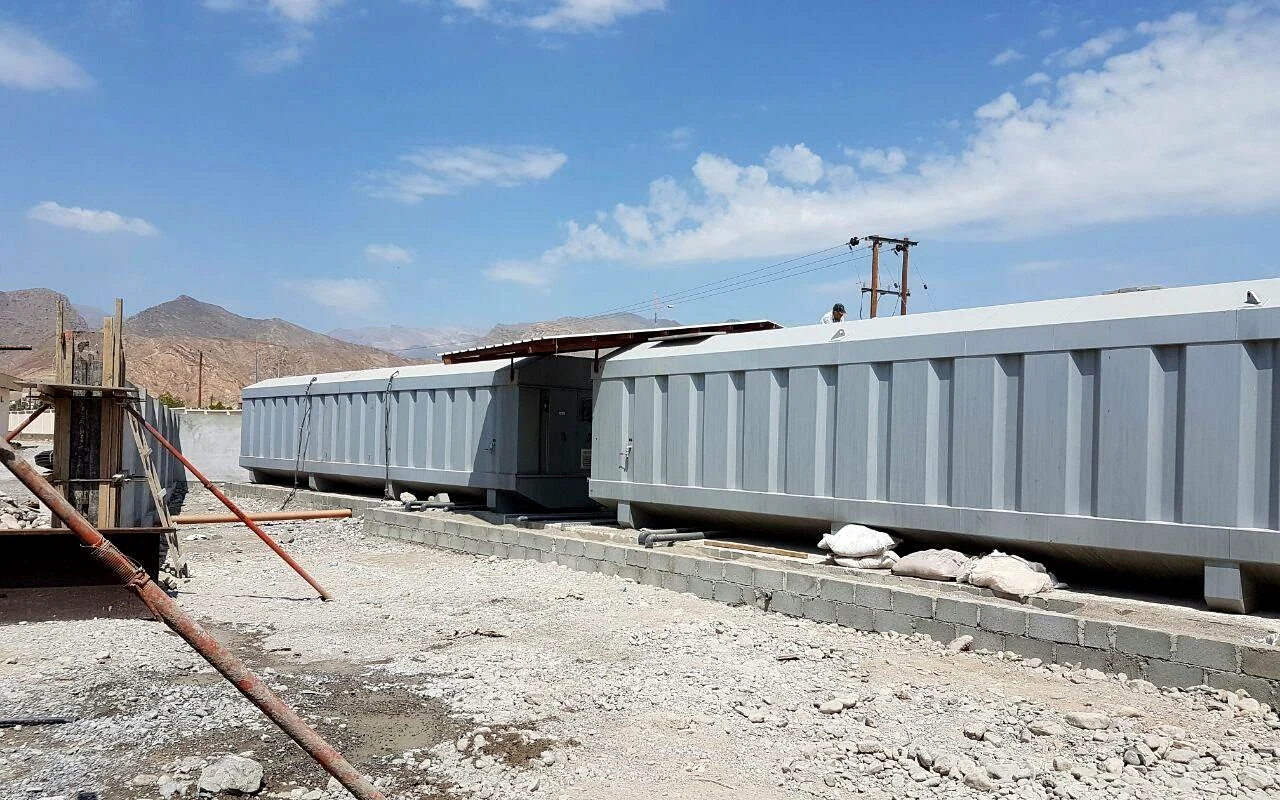 4 × 200 m³/day
 Oman
Wastewater treatment plant developed for Nizwa University using a sequencing-batch process.
Archive status: Completed
Explore project →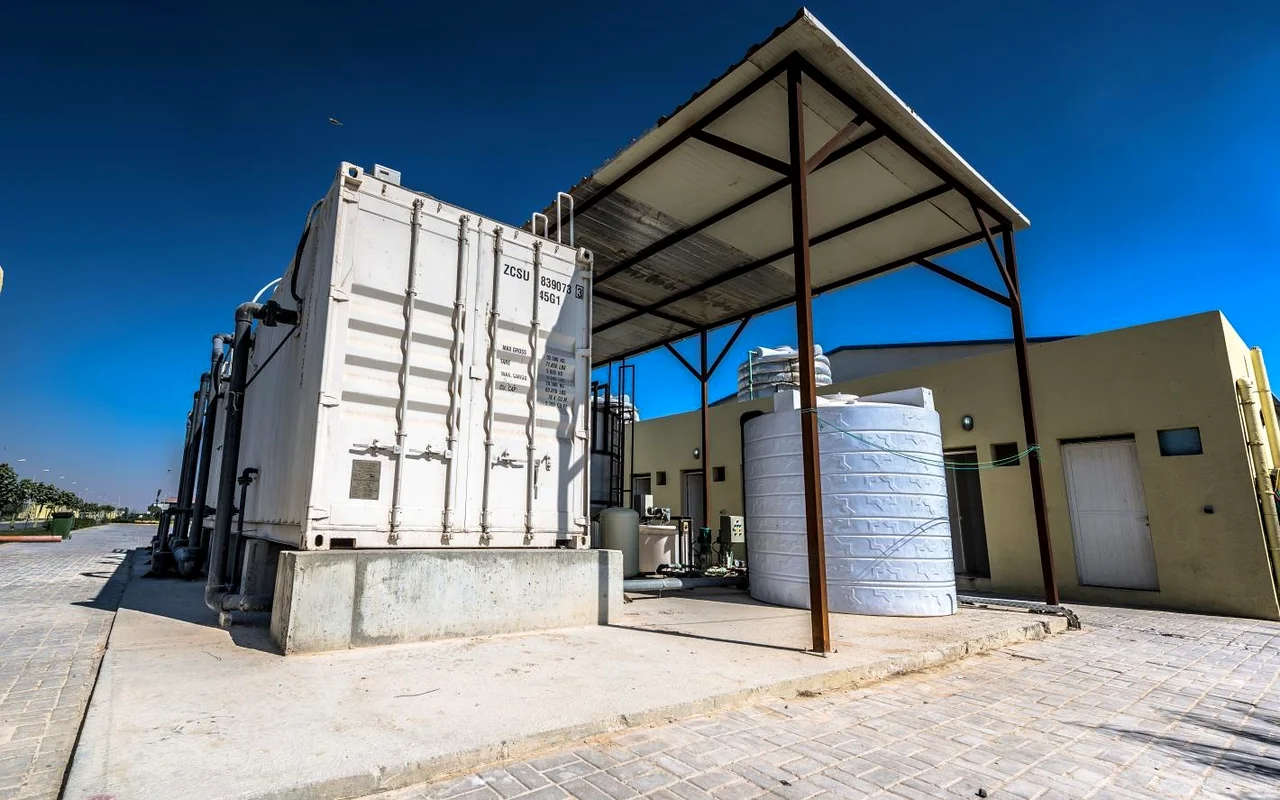 100 m³/day
 Qatar
Compact packaged wastewater-treatment solution based on membrane-bioreactor technology.
Archive status: Completed
Explore project →WaterMill · Türkiye and international
We develop treatment solutions for Türkiye and international projects, covering analysis, engineering, manufacturing, installation and commissioning needs.
We use optional analytics cookies to improve site performance. You can clear your choice at any time from your browser settings.