
Regulation-aware engineering
For wastewater projects within scope, engineering documentation is developed with the applicable Turkish Ministry Circular No. 2025/5 and current technical criteria in view.
Industrial wastewater
Industrial wastewater treatment requires the pollutant load to be understood in the context of the production process. WaterMill evaluates wastewater analysis, production cycles, discharge requirements and site infrastructure together to define the design, manufacturing, installation and commissioning scope.
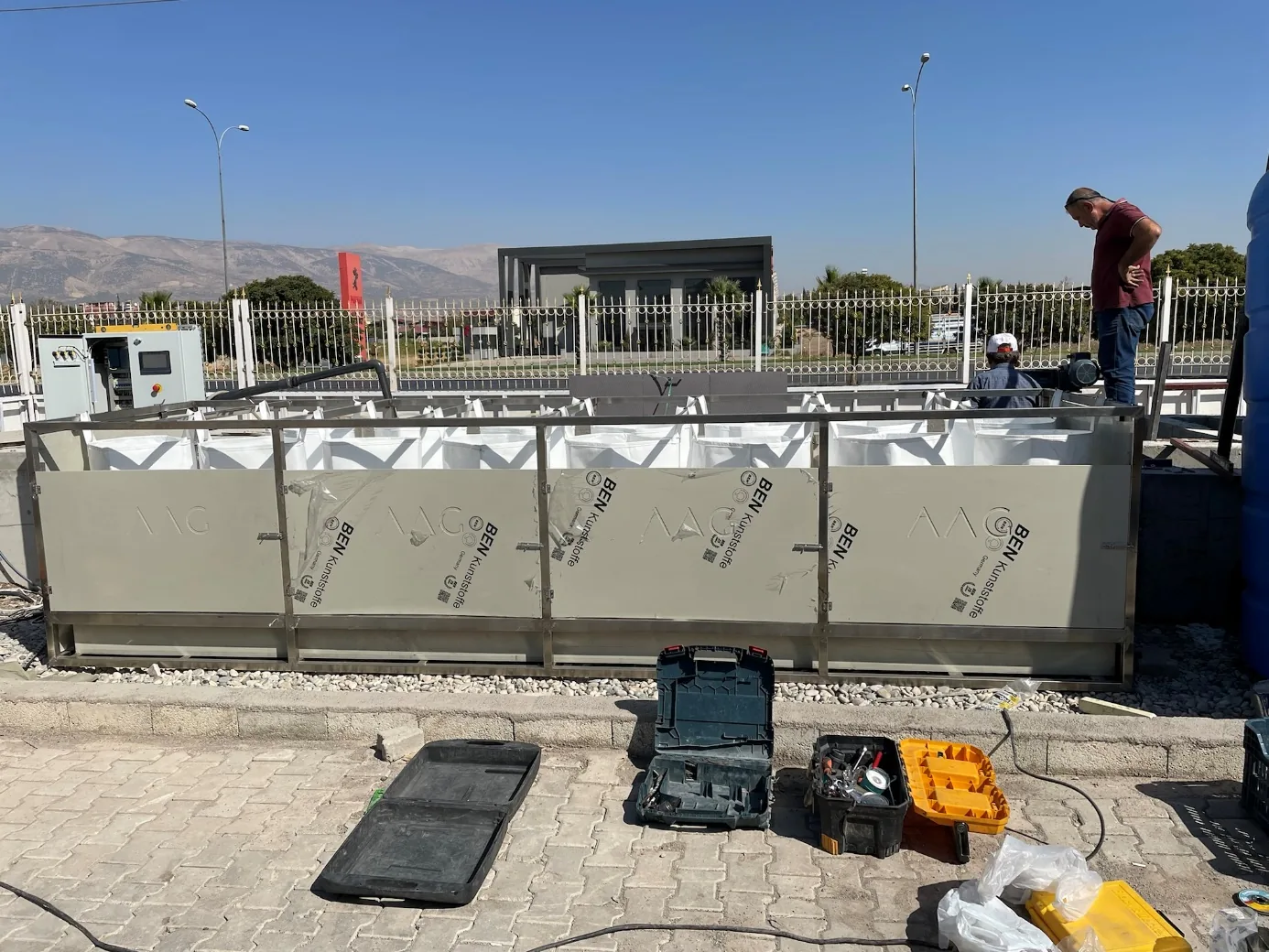
Engineering and life cycle
Equipment and materials are selected for project conditions from internationally established manufacturers and verifiable technical standards; manufacturing and factory acceptance checks are documented.
For wastewater projects within scope, engineering documentation is developed with the applicable Turkish Ministry Circular No. 2025/5 and current technical criteria in view.
Capacity is engineered around analysis, flow, load and site conditions, from small facilities to municipal, industrial-zone and large industrial plants.
Process design, equipment selection, manufacturing, automation, installation, commissioning and operator guidance can be delivered under one project scope.
Warranty, preventive maintenance, repair, spare parts, consumables planning and process-performance support are addressed throughout the system life cycle.
Field and installation visuals
The images are selected to better reflect the field application, equipment layout and project scale of the related system.
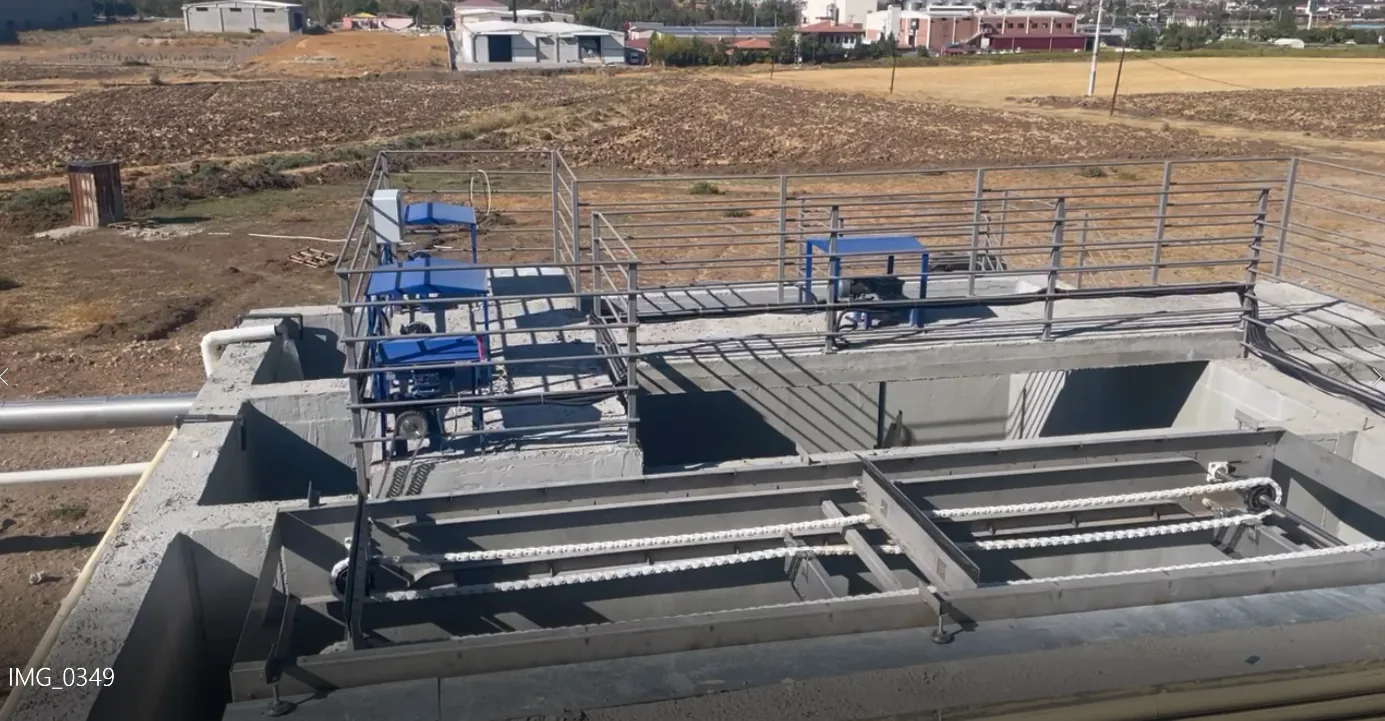
Mechanical equipment and access platform installed above the reinforced-concrete treatment basin.
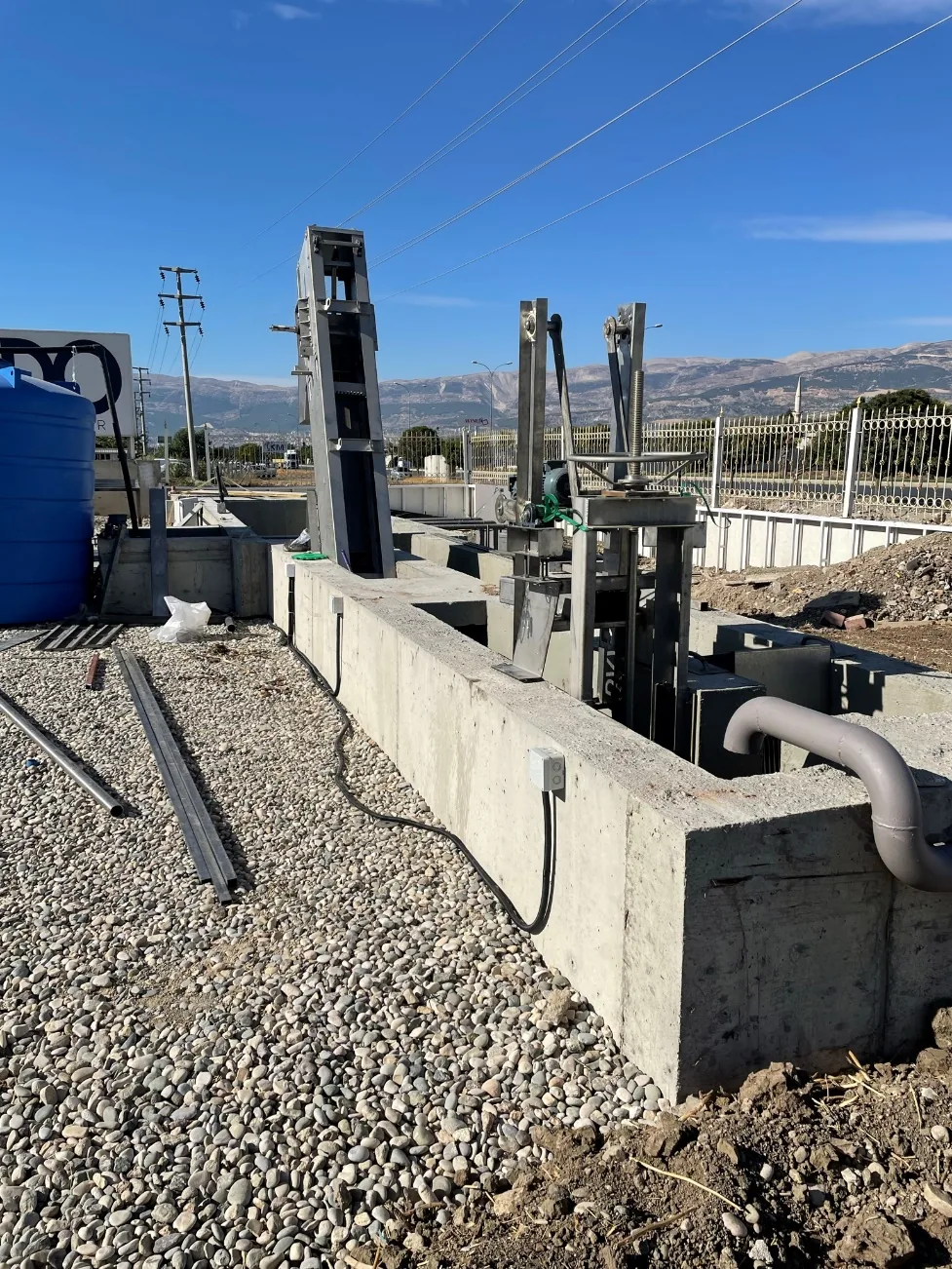
Side view of the packaged unit, field installation and process piping.
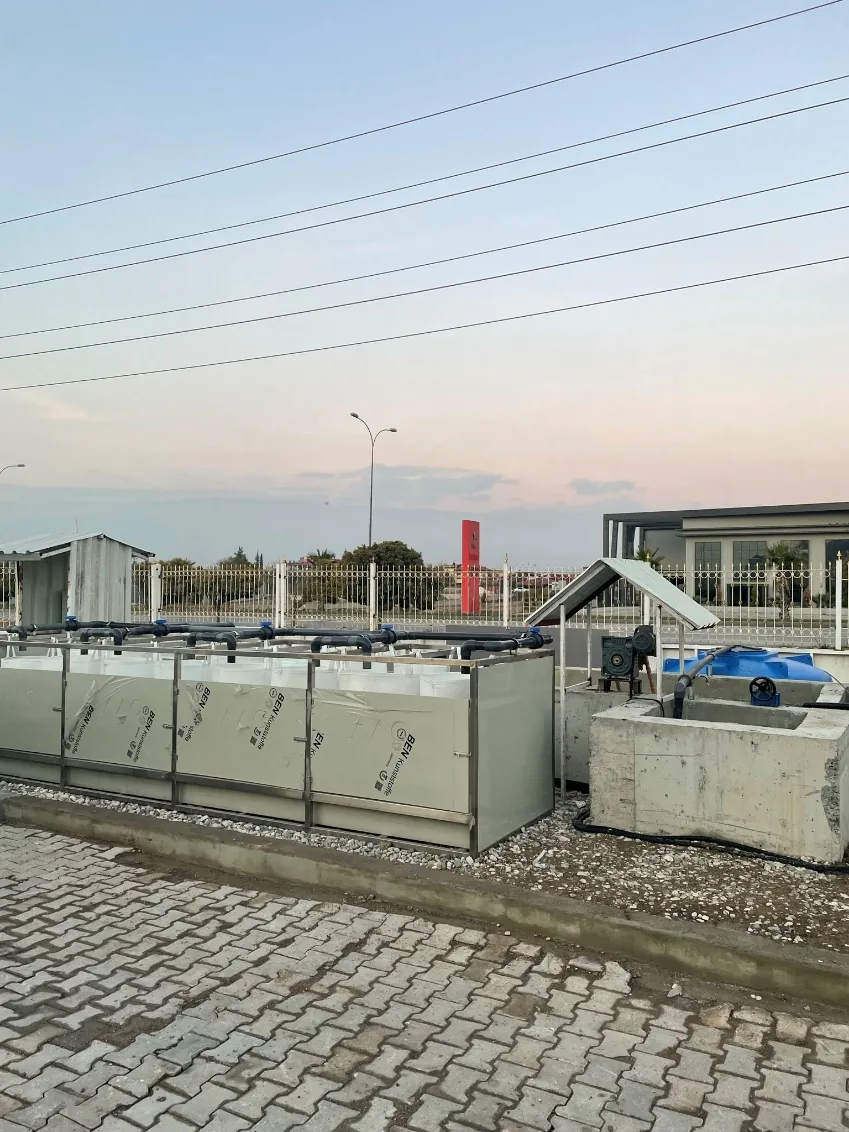
Outdoor side view of the packaged industrial wastewater treatment system.
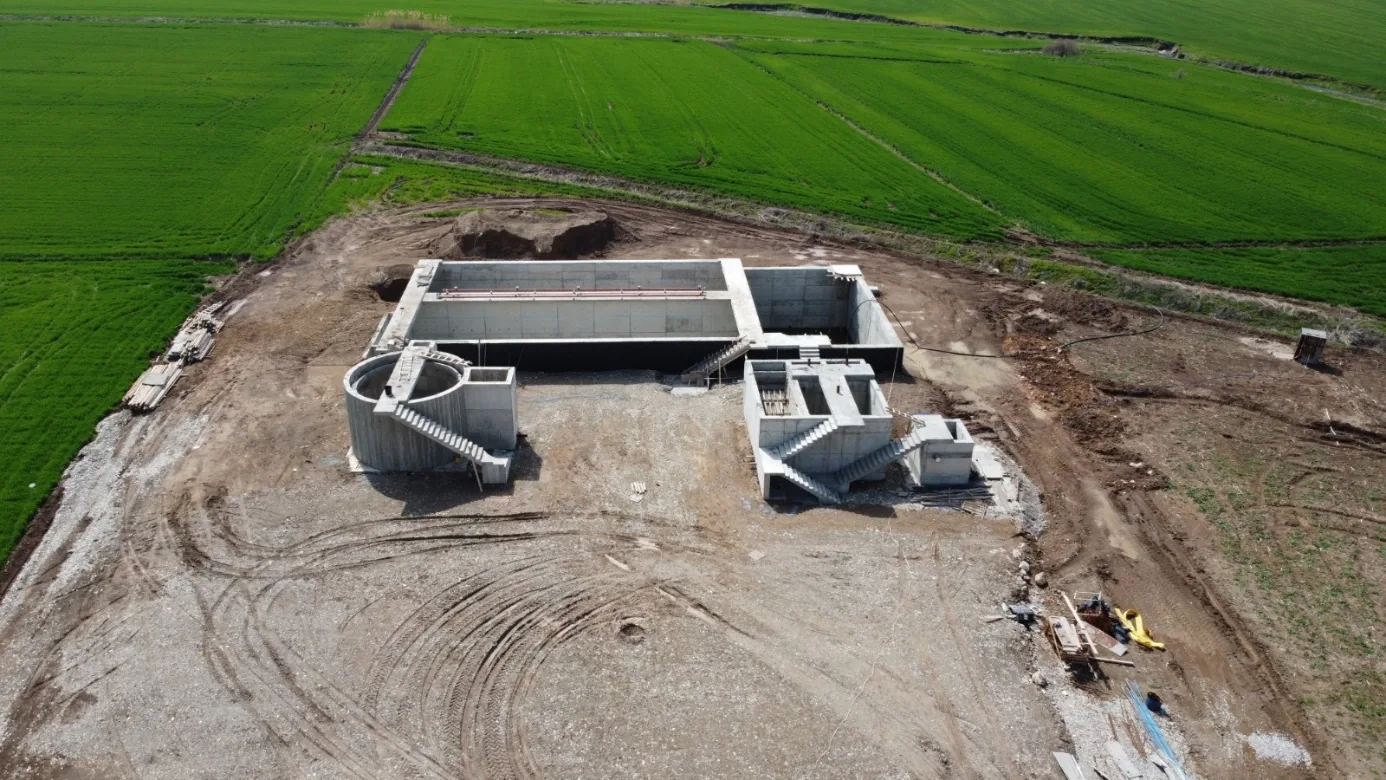
Aerial overview of the treatment facility during the construction stage.
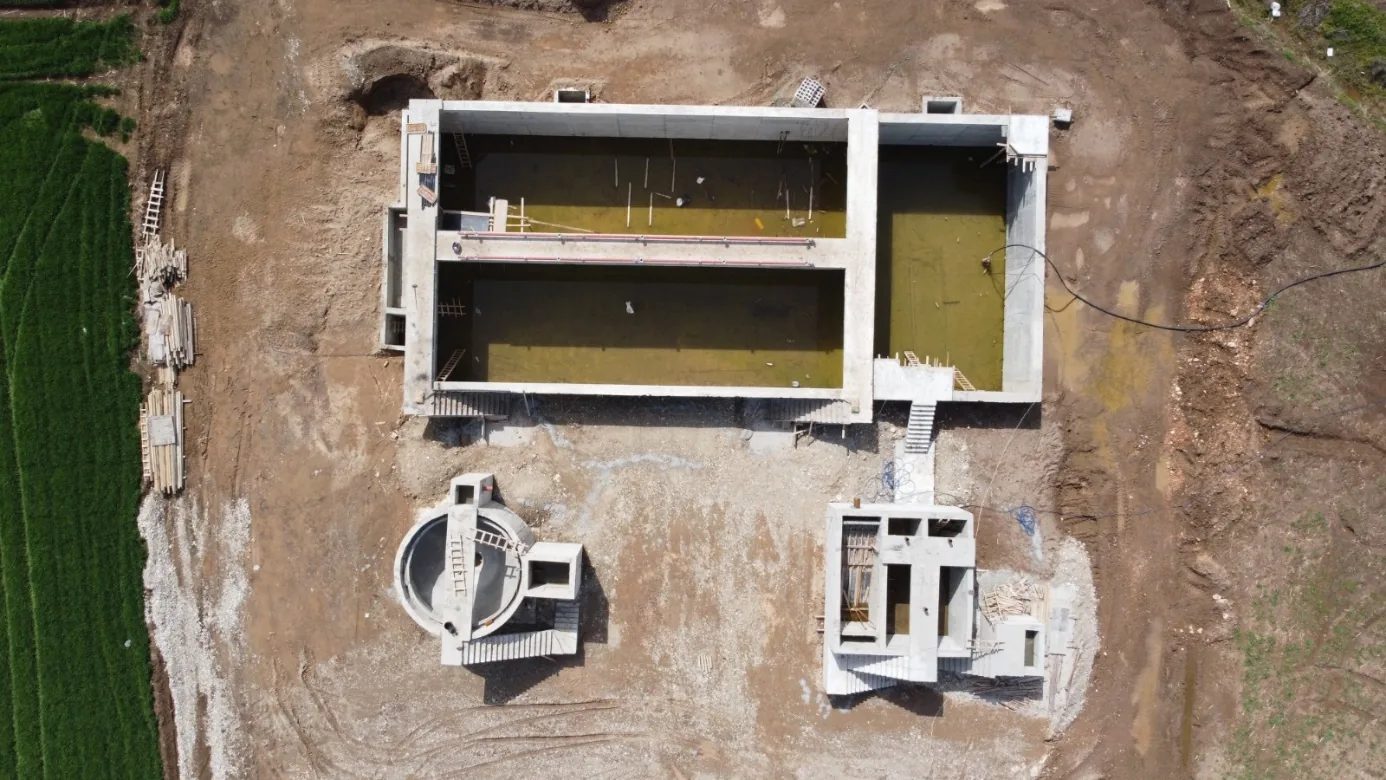
Aerial view of the reinforced-concrete treatment basins.
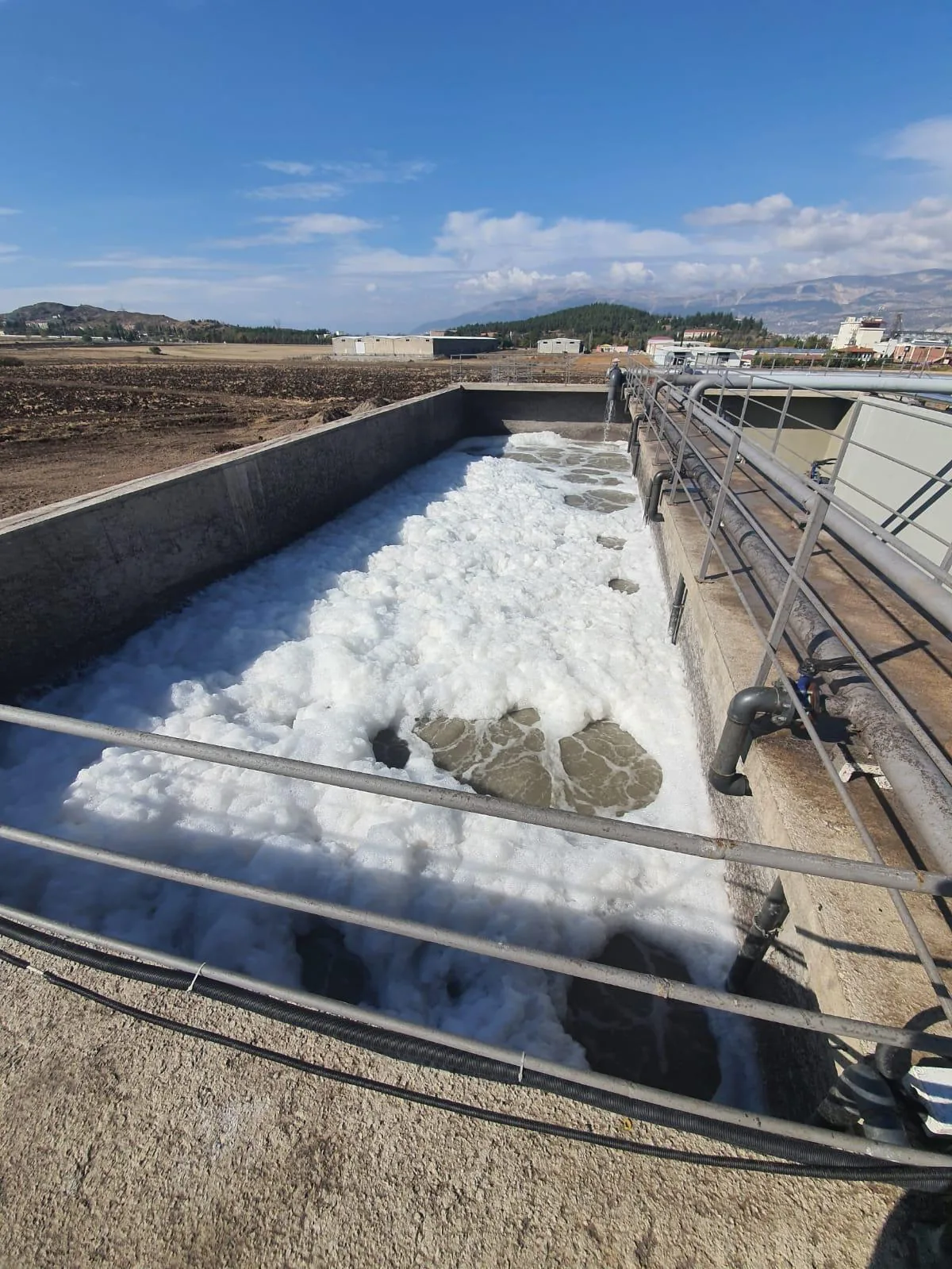
Activated sludge and surface foam in the operating aeration basin.
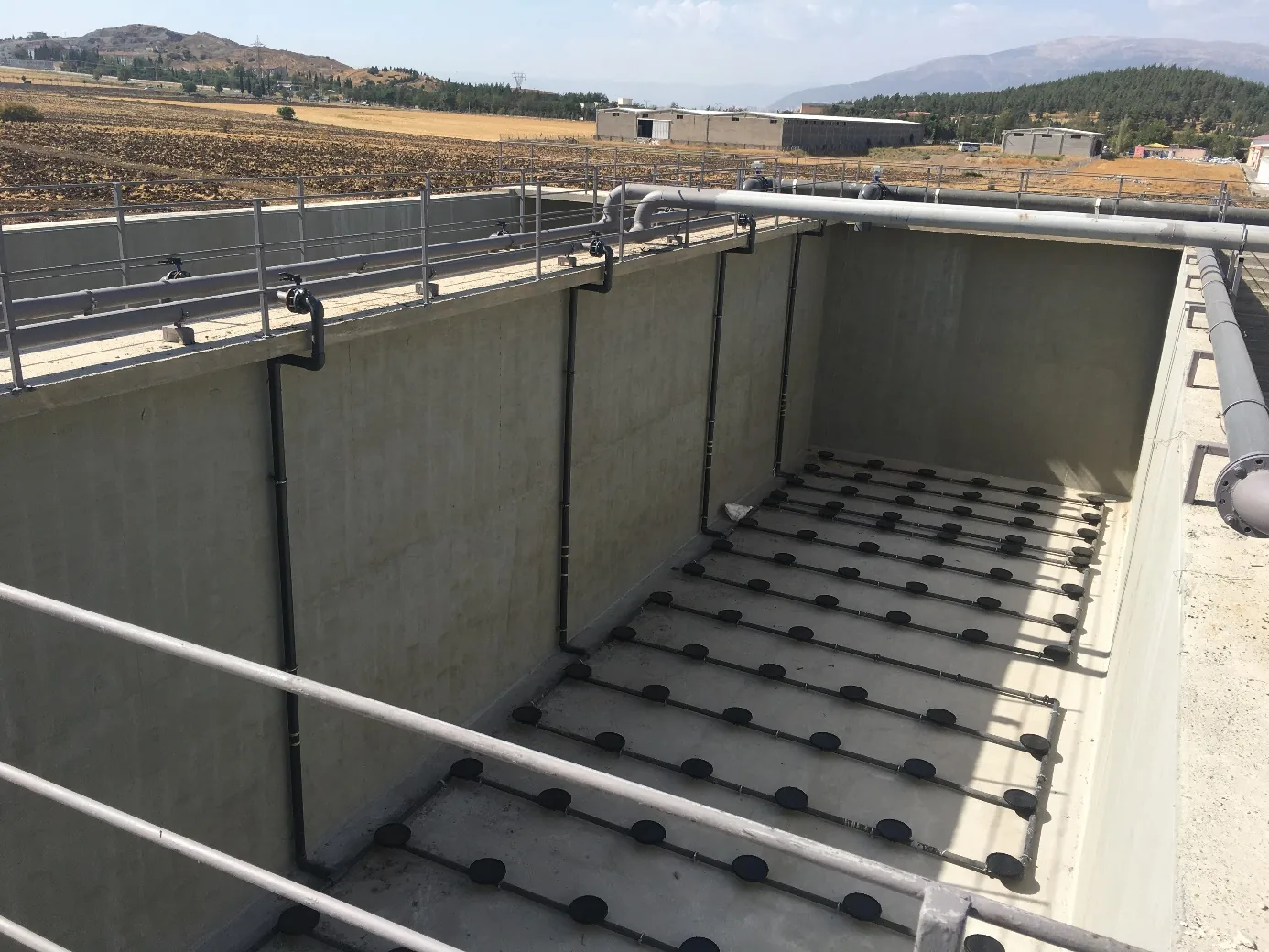
Aeration basin diffuser lines and process piping before commissioning.
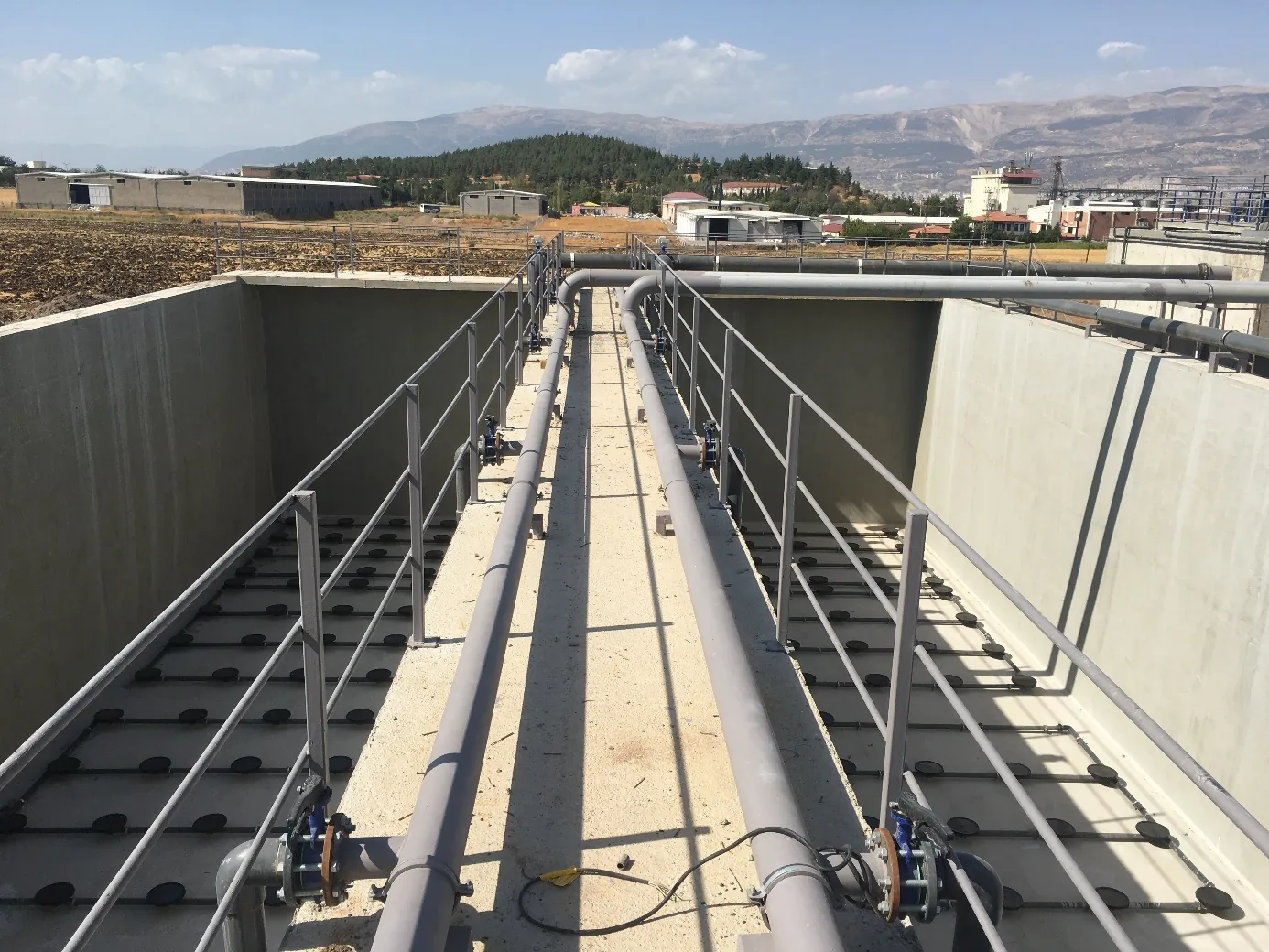
Twin-basin view showing the access platform and diffuser piping.
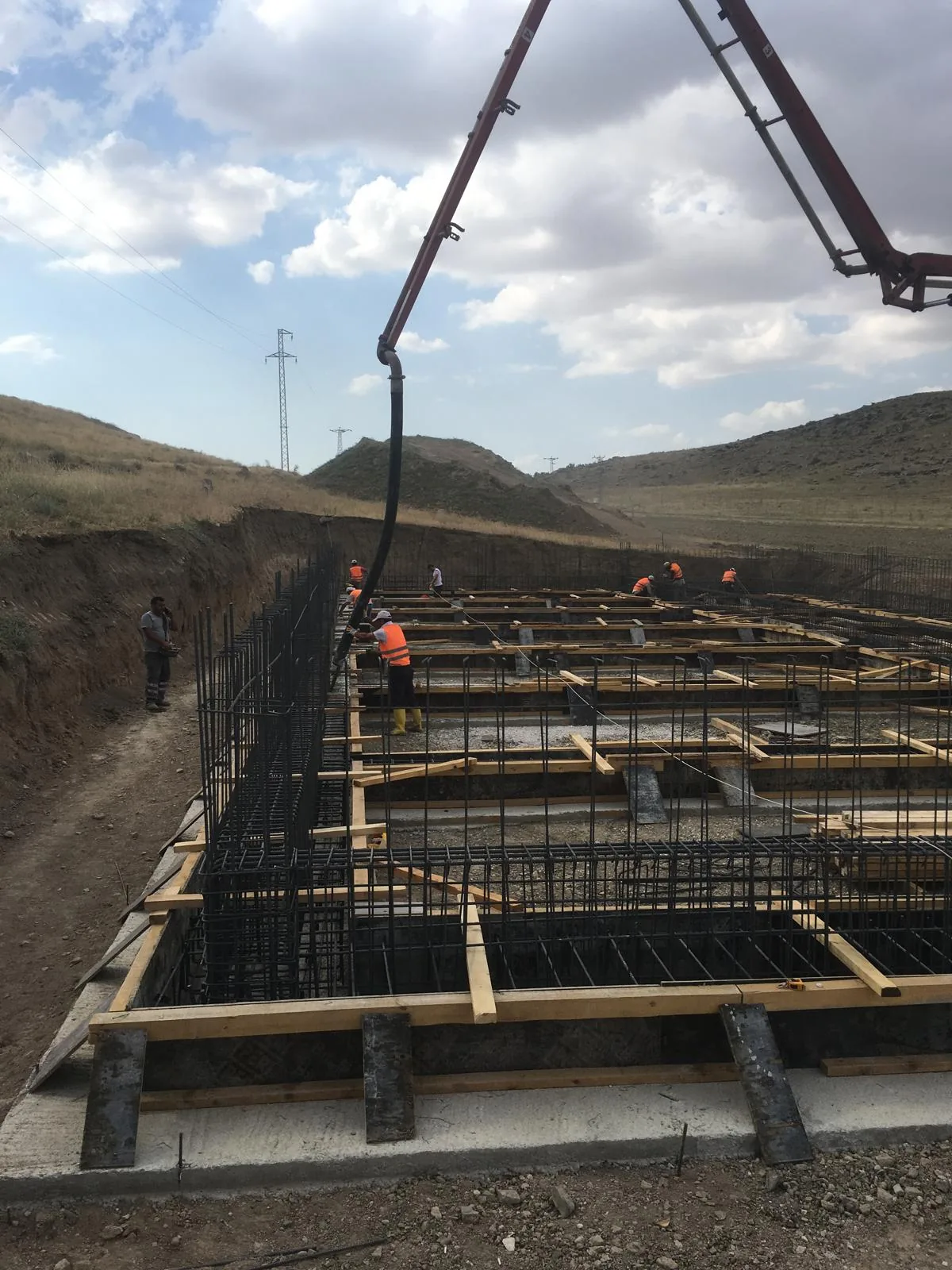
Reinforcement and concrete placement during treatment plant construction.
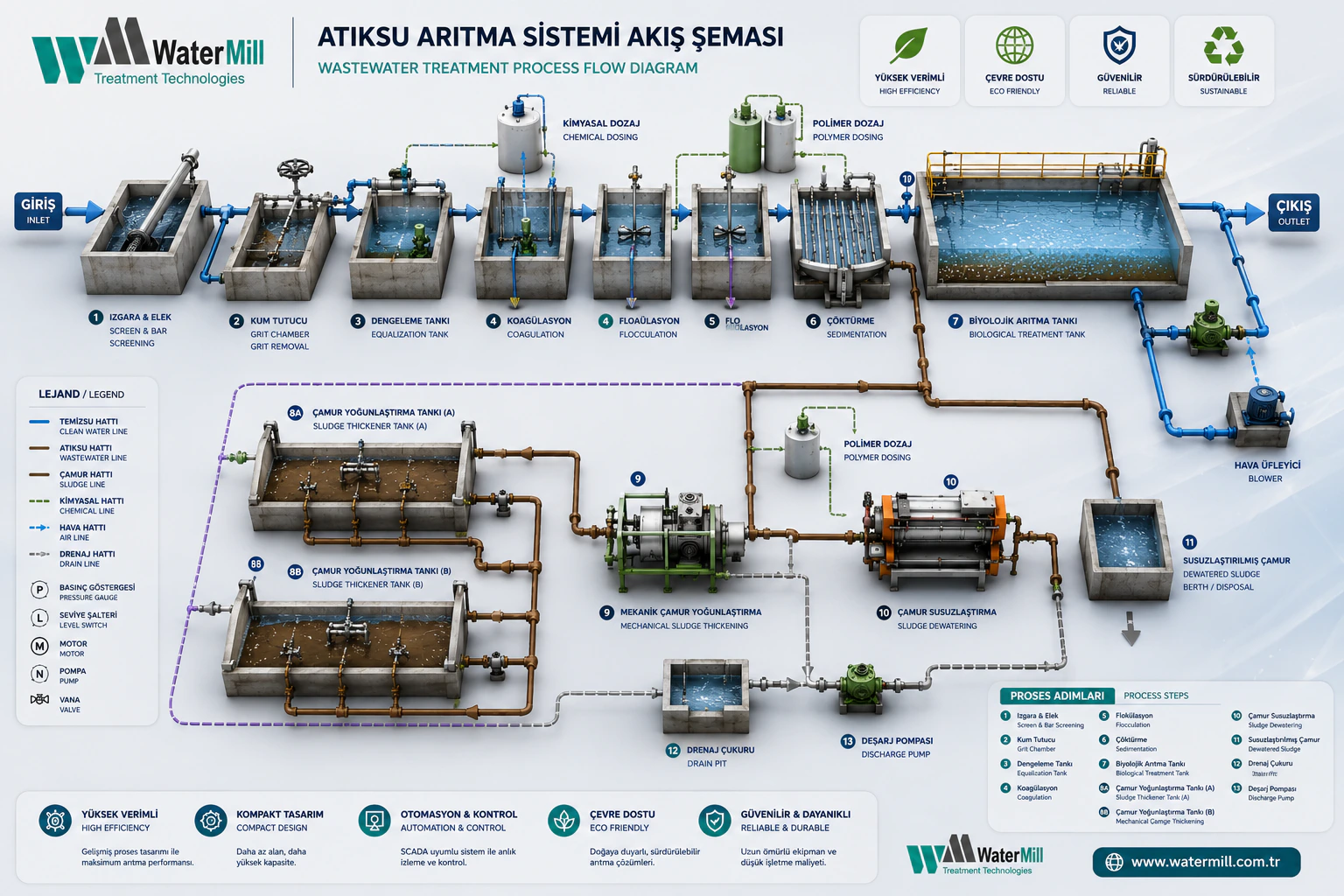
Detailed flow diagram covering physical, chemical and biological treatment together with sludge dewatering.
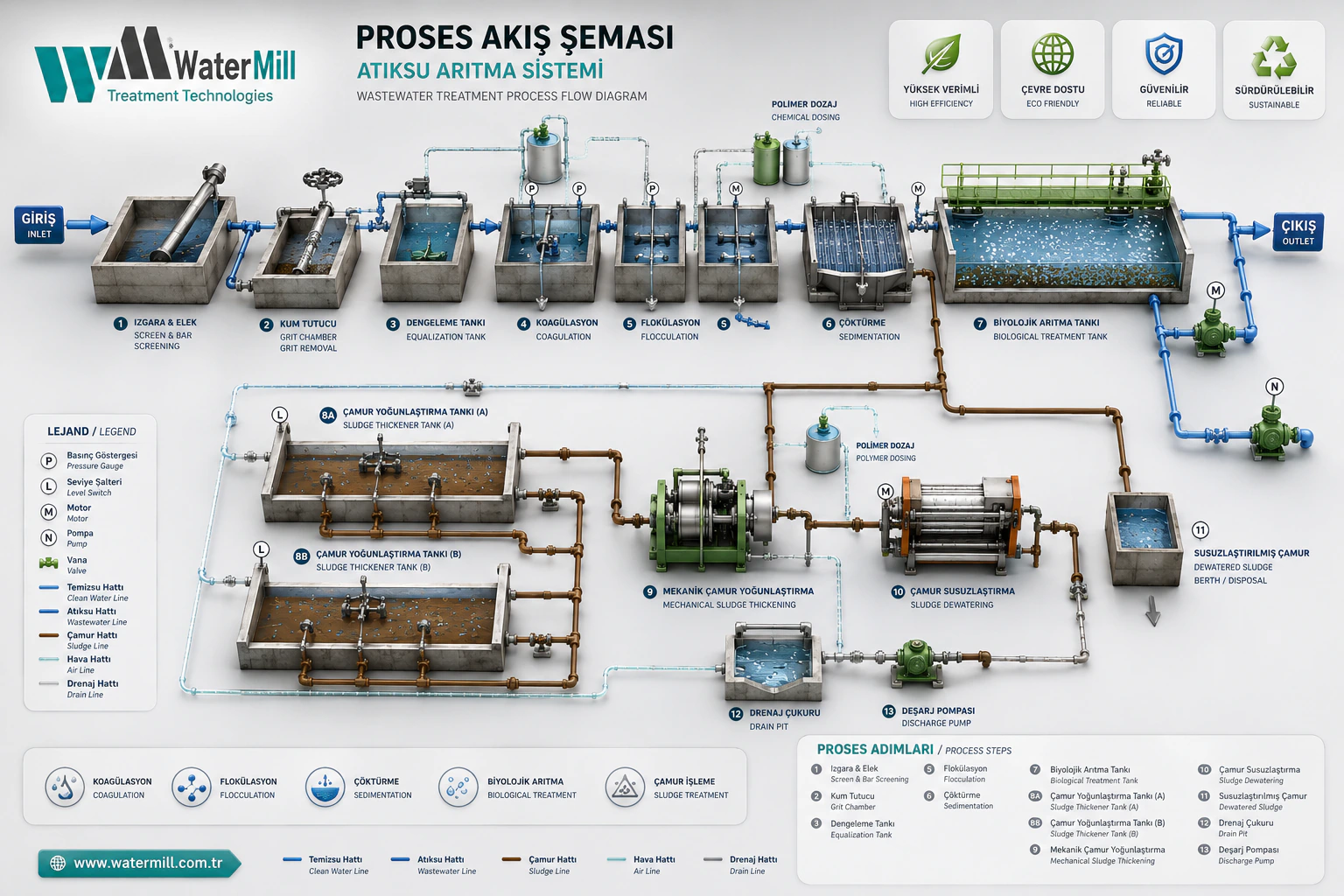
Process flow diagram showing the main treatment stages, sludge line, air line and drainage line.
Food, textile, metal, chemical, energy, mining and mixed industrial-zone streams have different pollutant profiles. COD, BOD, suspended solids, oil and grease, color, metals, salinity, pH and temperature can each change the required treatment train.
For that reason, industrial treatment is not based on one standard recipe. Screening, equalization, pH adjustment, chemical treatment, flotation, clarification, biological treatment, membranes and sludge handling are compared against representative data.
Streams with high suspended solids or oil may require physical and chemical pretreatment. Biodegradable loads require adequate reactor volume, oxygen transfer and sludge age. Where reuse is being considered, filtration, membrane treatment and disinfection may be added according to the intended water quality.
WaterMill balances treatment performance with operating practicality. Chemical consumption, energy, sludge production, maintenance access and operator capability are evaluated alongside compliance targets.
The assessment reviews production lines, shifts, batch discharges, existing tanks, utilities, chemical storage, energy supply and personnel access. These inputs are translated into a process flow, equipment schedule, hydraulic profile and site layout.
Commissioning verifies dosing, settling or flotation performance, aeration, sludge behavior, measurement points and alarm logic. Routine sampling and performance records help the facility detect changes before they become compliance or production risks.
Changes in raw materials, recipes, cleaning chemicals or production volume can alter wastewater characteristics. Composite sampling, jar testing, settling observations or pilot work may therefore be required for critical projects.
Equalization and emergency scenarios are defined for pH shock, temperature, oil loading or accidental chemical discharge. Communication between production and treatment teams gives operators time to protect the biological process and adjust the plant responsibly.
Operating records should connect laboratory results with flow, chemical dosing, energy use and production conditions. Trending these values helps distinguish a temporary disturbance from a structural capacity problem. The same data provides a defensible basis for maintenance, optimization and future expansion decisions.
Frequently asked questions
COD, BOD, suspended solids, pH, oil and grease, nutrients and sector-specific pollutants should be evaluated.
Participant profiles, peak loads and variable pollutants are reviewed before equalization and treatment stages are defined.
Reuse can be assessed when the intended application, regulation and target quality are clear and suitable advanced treatment is provided.
WaterMill · Türkiye and international
We develop treatment solutions for Türkiye and international projects, covering analysis, engineering, manufacturing, installation and commissioning needs.
We use optional analytics cookies to improve site performance. You can clear your choice at any time from your browser settings.