
Membrane Systems
1 min readWhy does a reverse osmosis system lose performance over time?
Reduced flow or rising pressure does not always mean the membranes have reached the end of their life.
Short answer
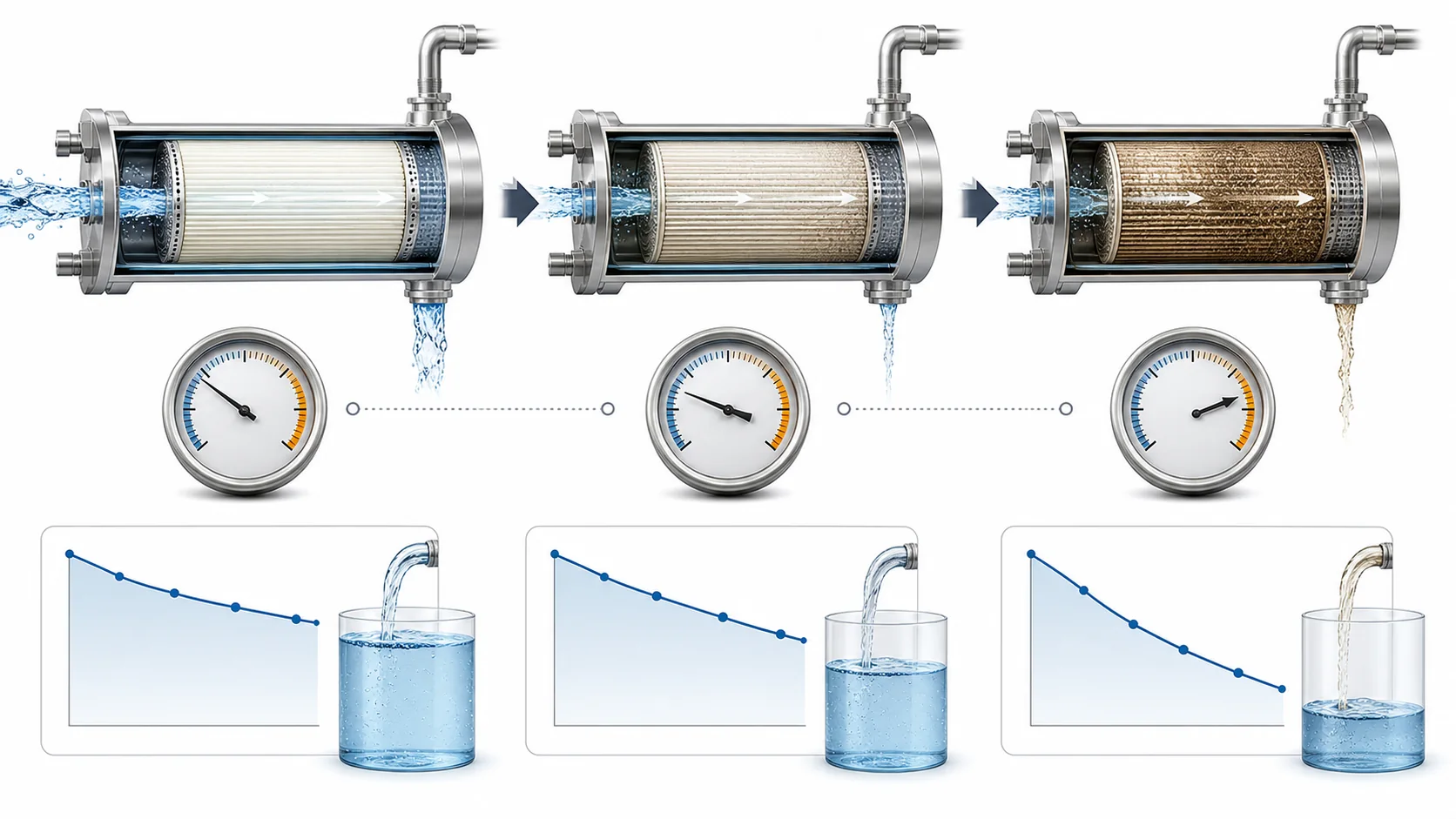
Performance loss in reverse osmosis systems rarely has a single cause. Inadequate pretreatment, scaling, biological fouling, incorrect dosing or changing operating conditions may all contribute.
Three early signs to check
If production flow falls while pressure rises, surface fouling should be assessed. If product-water conductivity rises, inspect seals and connections as well as membranes. If values change rapidly, confirm whether feed-water conditions have changed.
Should the membranes be replaced immediately?
Not always. Review trend data first, apply an appropriate cleaning procedure where needed and confirm that pretreatment is doing its job. Replacing membranes without identifying the cause may lead to the same issue again.
What should operators record?
Regular records of flow, pressure, conductivity, temperature and cleaning dates reveal small changes before they become larger problems. A well-maintained operating log is often the most useful diagnostic tool.
Technical sources
These sources support the general technical guidance. Site design data and the requirements of the project country are assessed separately.