
Regulation-aware engineering
For wastewater projects within scope, engineering documentation is developed with the applicable Turkish Ministry Circular No. 2025/5 and current technical criteria in view.
Domestic wastewater
Domestic wastewater treatment systems are designed around population equivalent, actual occupancy patterns, peak use and the required discharge quality. WaterMill supplies packaged, SBR and MBR-based solutions with a site-specific installation and operating plan for residential developments, hotels, camps and community facilities.
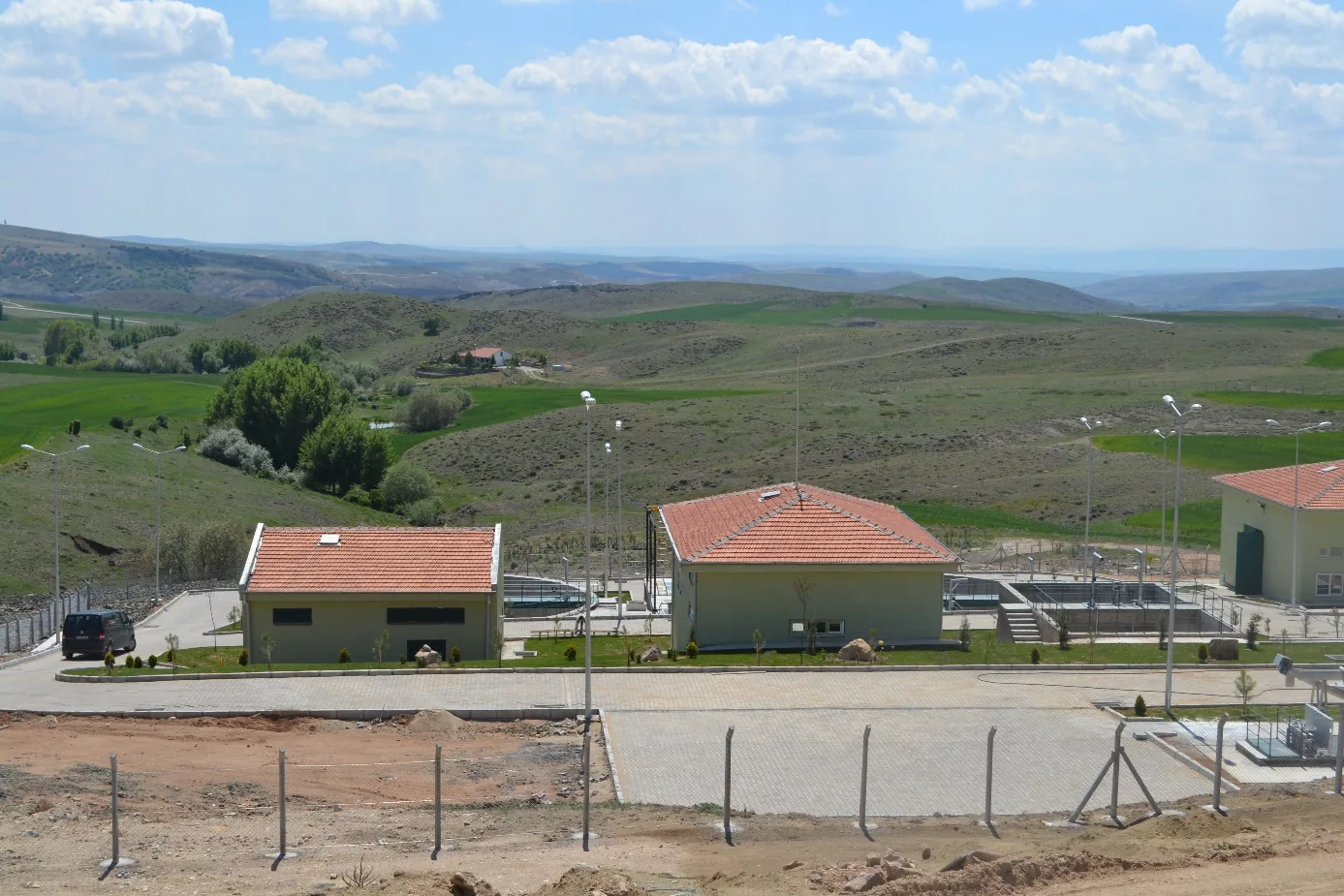
Engineering and life cycle
Equipment and materials are selected for project conditions from internationally established manufacturers and verifiable technical standards; manufacturing and factory acceptance checks are documented.
For wastewater projects within scope, engineering documentation is developed with the applicable Turkish Ministry Circular No. 2025/5 and current technical criteria in view.
Capacity is engineered around analysis, flow, load and site conditions, from small facilities to municipal, industrial-zone and large industrial plants.
Process design, equipment selection, manufacturing, automation, installation, commissioning and operator guidance can be delivered under one project scope.
Warranty, preventive maintenance, repair, spare parts, consumables planning and process-performance support are addressed throughout the system life cycle.
Field and installation visuals
The images are selected to better reflect the field application, equipment layout and project scale of the related system.
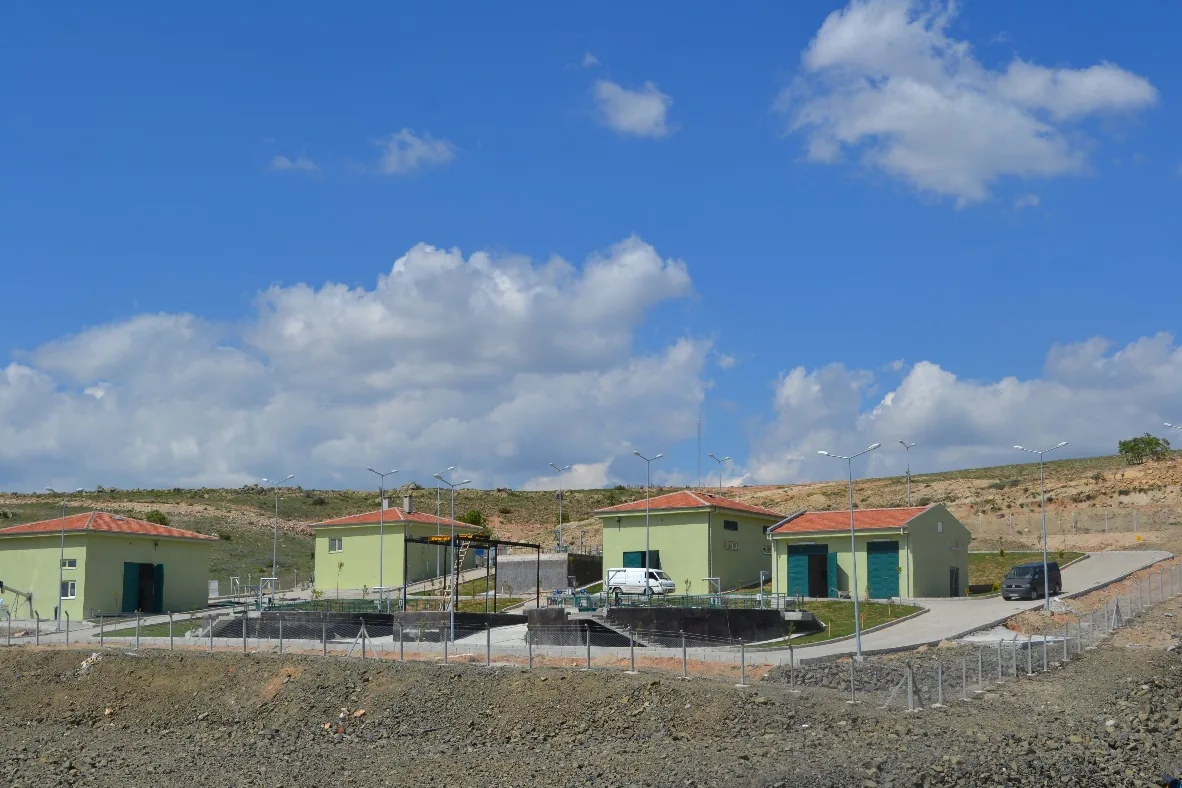
General view of the treatment building and basin arrangement.
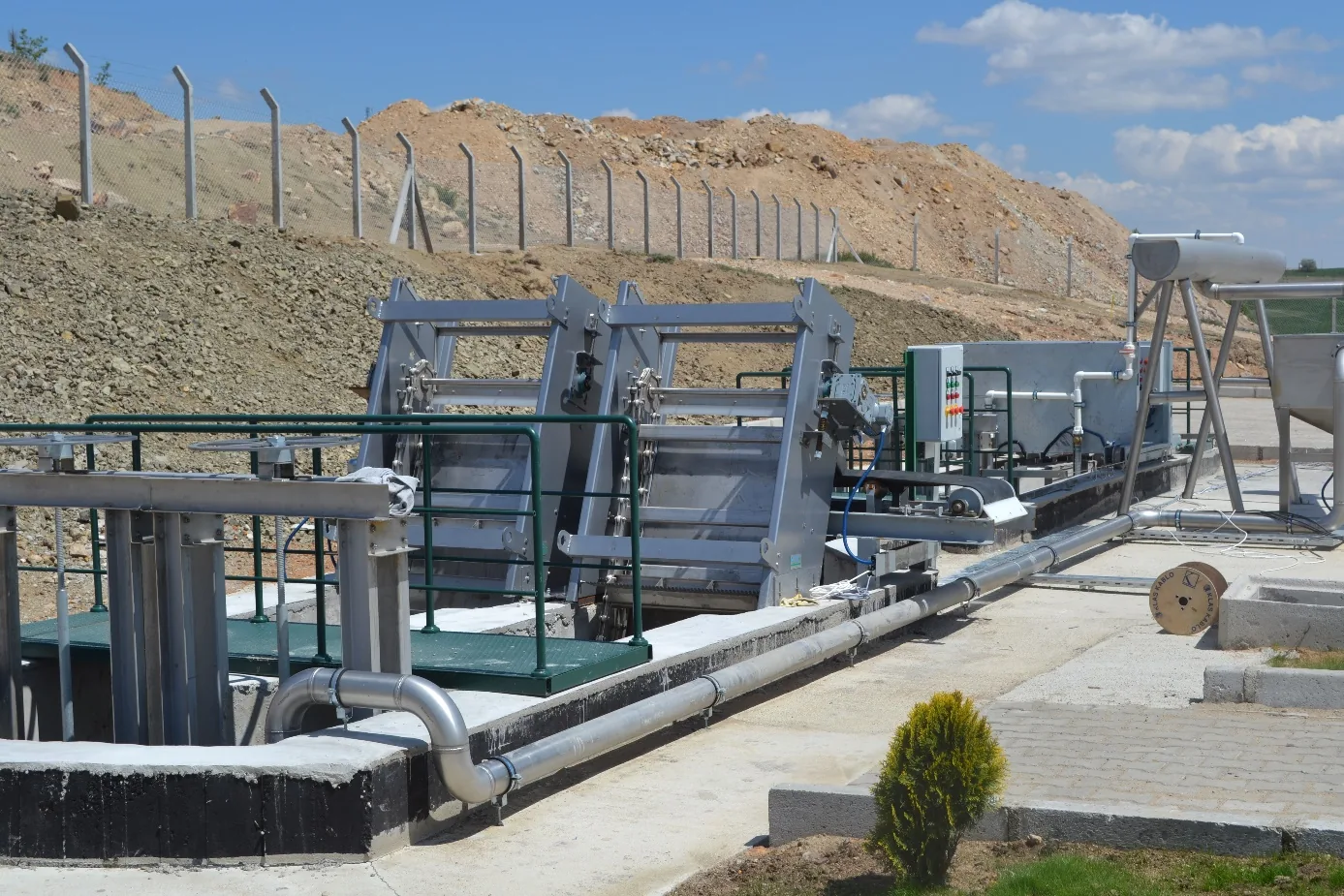
Mechanical screening and pretreatment equipment at the domestic wastewater plant.
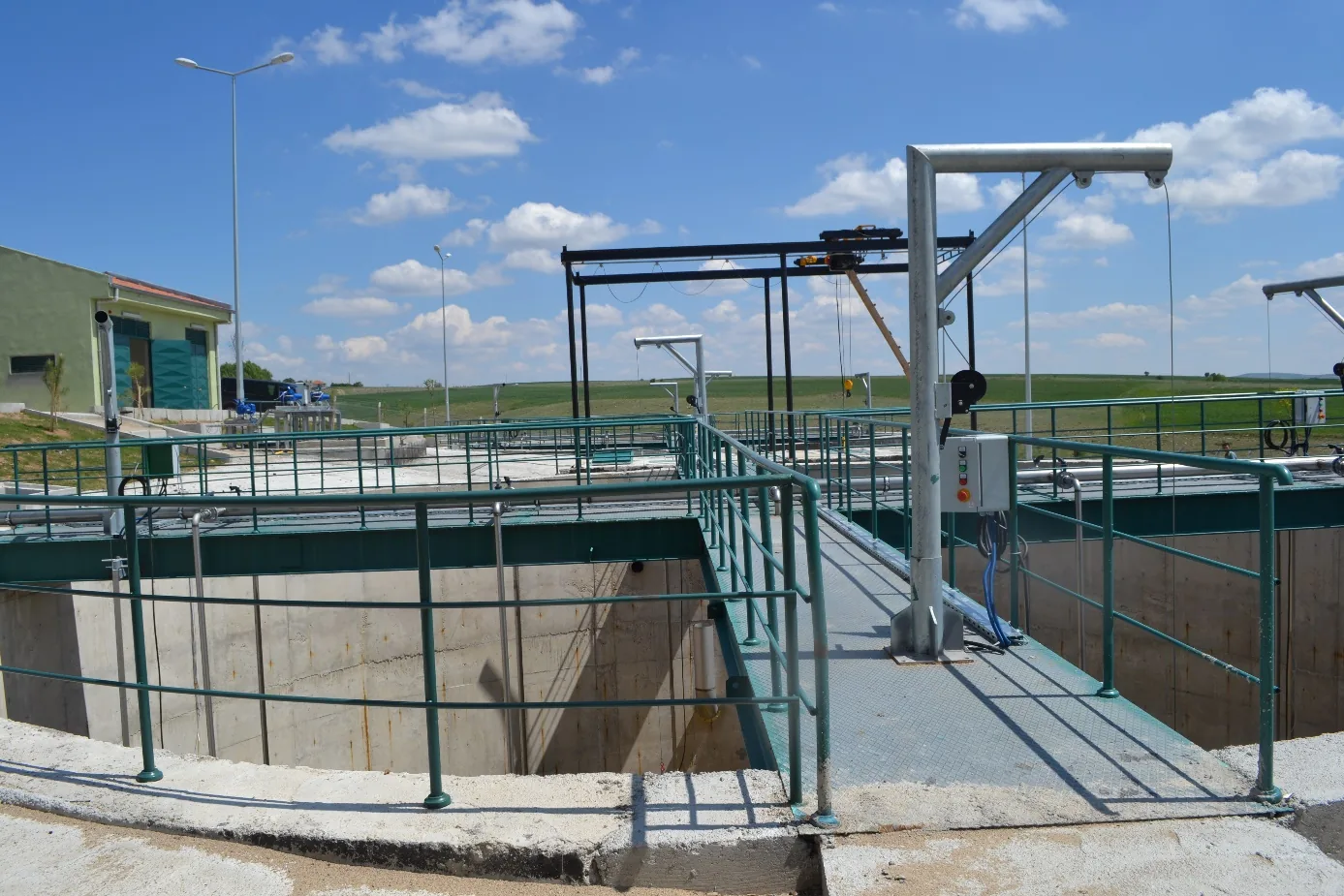
Treatment basins, service platform and lifting equipment used for maintenance access.
The number of users provides an initial estimate, but hourly peaks, seasonal occupancy, kitchens, laundry, camps and changing staff levels affect the real flow and organic load. Equalization and biological capacity should reflect actual use rather than a single average figure.
Hotels, permanent residential developments and temporary camps create different operating patterns even at similar nominal capacities. Sludge handling, buffer volume, aeration and standby arrangements are therefore reviewed for each site.
Packaged systems offer compact installation and a clear operating boundary. SBR treatment can respond to variable flow through controlled cycles. MBR treatment can be considered where footprint is restricted or stable, high-quality effluent is needed.
The discharge point, local requirements and any intended reuse determine whether filtration, disinfection or additional polishing is required. Reuse is assessed according to the application rather than assumed from the biological treatment result alone.
Safe access to pumps, blowers, diffusers, valves, panels and sludge withdrawal points is essential. Poor access makes routine maintenance difficult and increases the duration of small failures. WaterMill includes these practical details in the layout.
Commissioning covers aeration, biological development, sludge observation, cycle settings and operator guidance. A simple inspection and maintenance plan helps the site team identify changes before treatment performance is affected.
Hotels, holiday developments and temporary camps may vary greatly between low season and full occupancy. Equalization, aeration control, parallel modules and restart procedures are planned to keep the biological process stable across those conditions.
Where treated water may be used for landscaping or another suitable auxiliary purpose, filtration, disinfection, storage and distribution are considered as one system. Health, odor, contact risk and seasonal demand must be reviewed before a reuse arrangement is accepted.
Frequently asked questions
User count is a starting point; daily flow, peak use, seasonal variation and the discharge target must also be considered.
Even at similar capacity, occupancy and operating patterns differ, so each project requires a separate operating scenario.
Correct aeration, enclosed-volume management, sludge control and regular maintenance significantly reduce odor risk.
WaterMill · Türkiye and international
We develop treatment solutions for Türkiye and international projects, covering analysis, engineering, manufacturing, installation and commissioning needs.
We use optional analytics cookies to improve site performance. You can clear your choice at any time from your browser settings.